Four eras of the dog in painting.
The history of the dog in Western painting runs in four broad movements. Each had its own conventions, its own great practitioners, and its own way of looking at the animal.
Renaissance
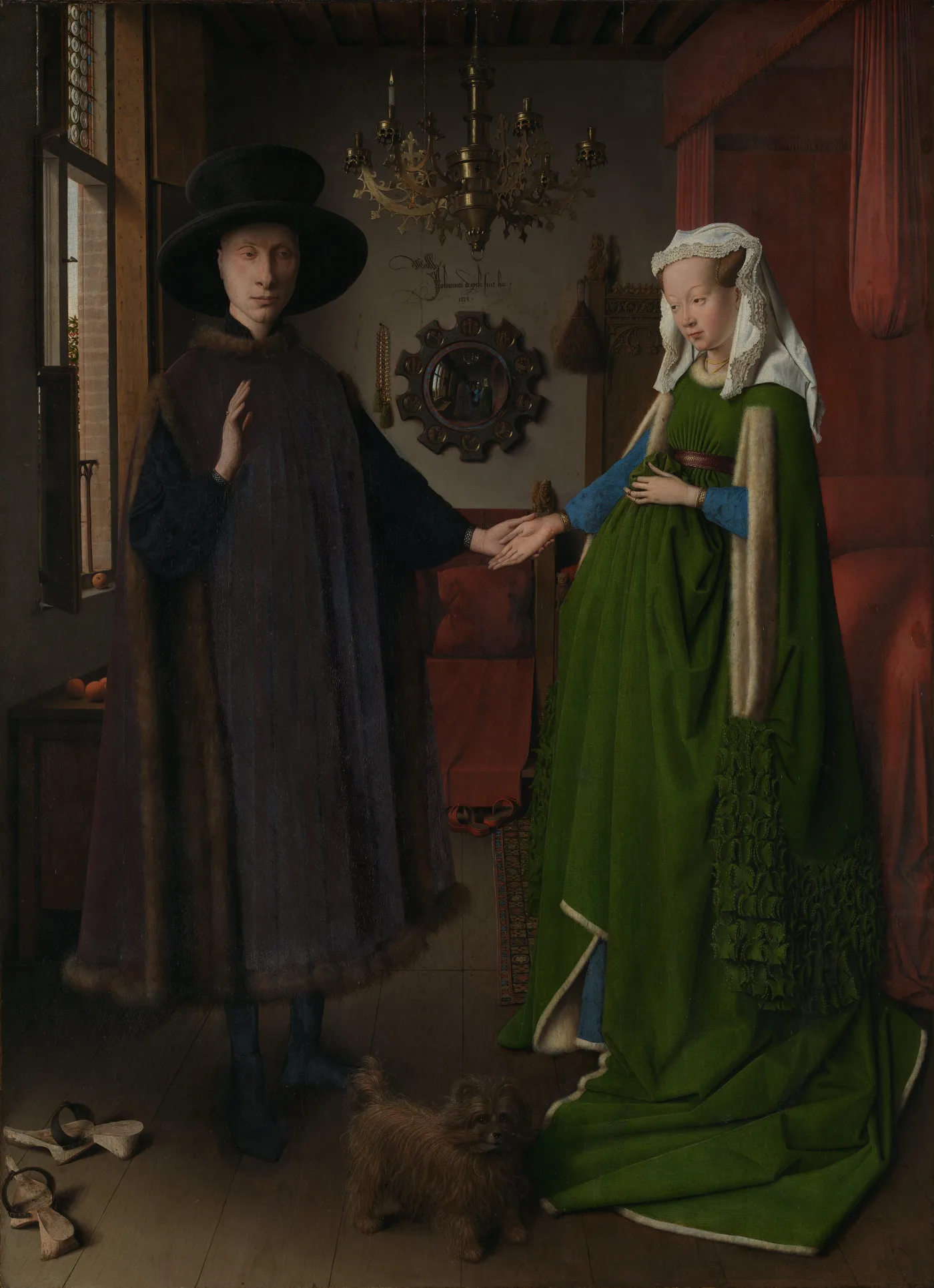
The dog enters the picture as a symbol of fidelity and a marker of nobility, attentive at the edges of grand allegory and at the feet of royal sitters.
- Jan van Eyck The Arnolfini Portrait 1434
- Titian Charles V with a Dog 1533
- Paolo Veronese The Wedding at Cana (detail) 1563
- Diego Velázquez Las Meninas 1656
Sporting Age
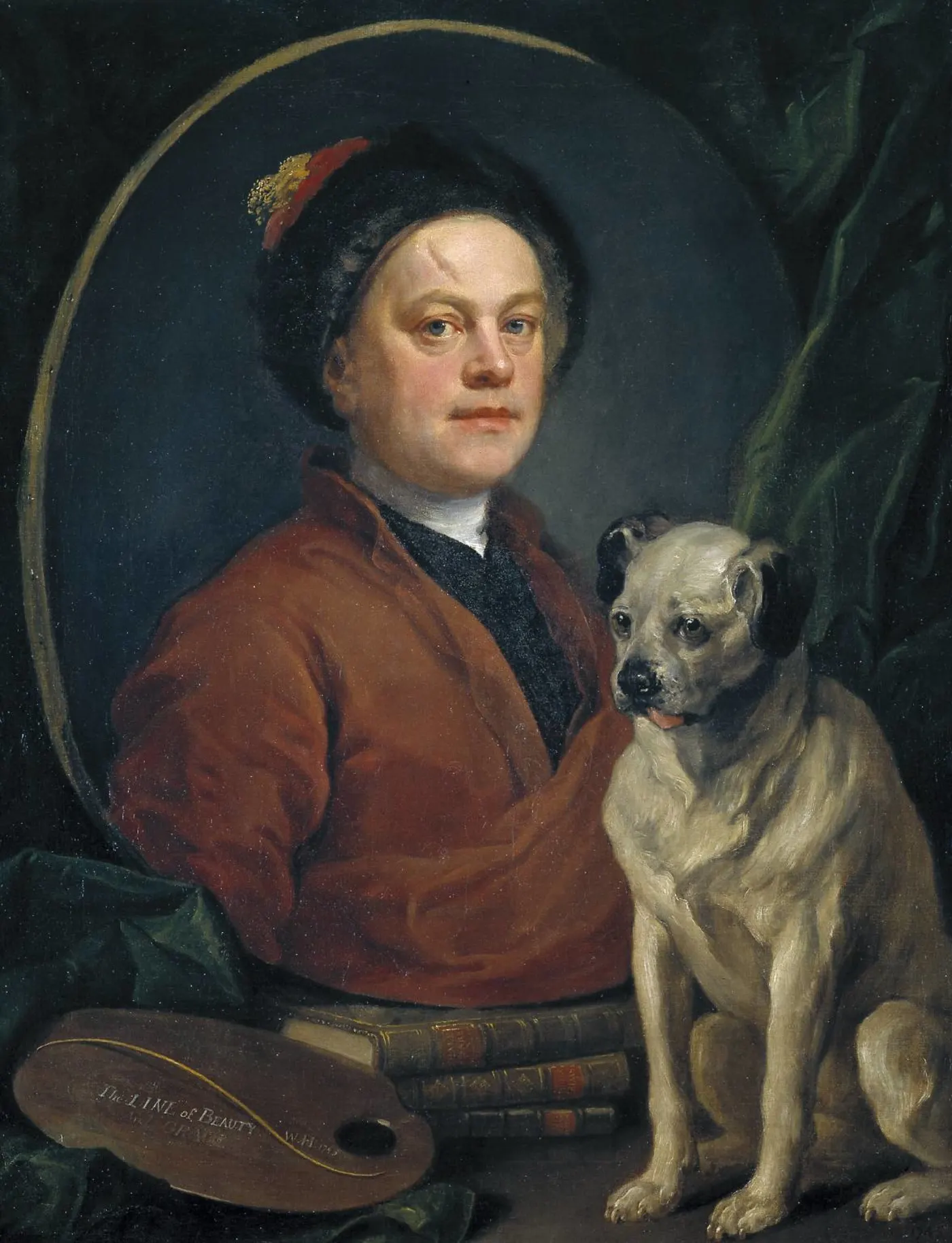
The age of the sporting portrait. Stubbs gives the hunting dog the same anatomical seriousness he gives the racehorse; Reynolds and Hogarth bring the parlor pet to studio scale.
- William Hogarth The Painter and His Pug 1745
- Sir Joshua Reynolds Miss Jane Bowles 1775
- George Stubbs A Brown and White Norfolk or Water Spaniel 1778
- George Stubbs White Poodle in a Punt c. 1780
- George Stubbs A Couple of Foxhounds 1792
Victorian
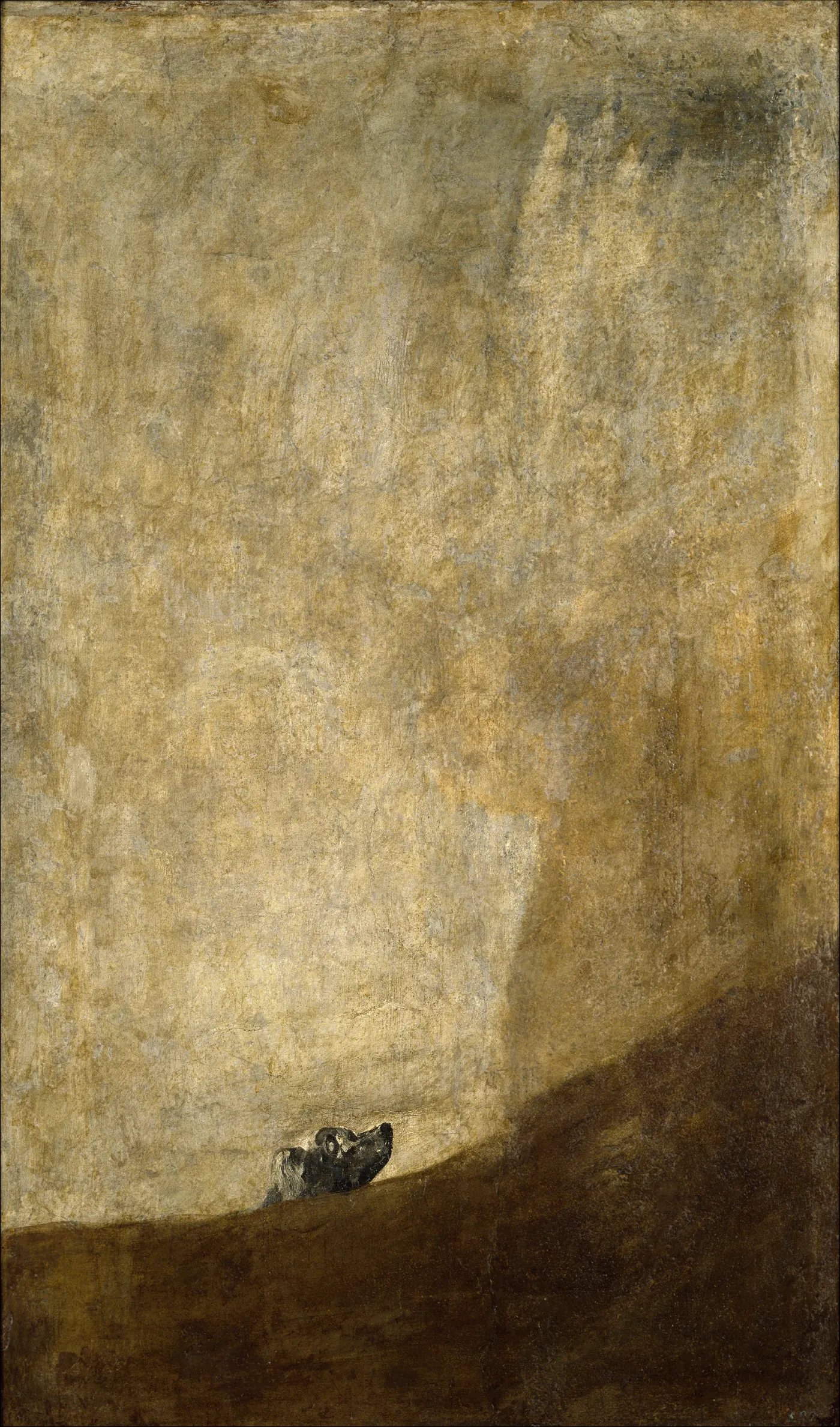
The century in which the dog moves from the margins of the canvas to its center. Landseer's sentimental portraiture defines a whole school; Goya and Manet pull the subject toward modern feeling.
- Francisco Goya The Dog c. 1820–1823
- Sir Edwin Landseer The Old Shepherd's Chief Mourner 1837
- Sir Edwin Landseer A Distinguished Member of the Humane Society 1838
- Sir Edwin Landseer Dignity and Impudence 1839
- Rosa Bonheur A Limier Briquet Hound 1856
- Alfred de Dreux Pug in an Armchair c. 1857
- Édouard Manet King Charles Spaniel c. 1866
- Briton Rivière Fidelity 1869
- Édouard Manet Tama, the Japanese Dog c. 1875
- James Tissot Hush! (The Concert) c. 1875
- Pierre-Auguste Renoir Madame Charpentier and Her Children 1878
- Briton Rivière Sympathy 1878
- William Henry Hamilton Trood The Guardian 1886
Modernist
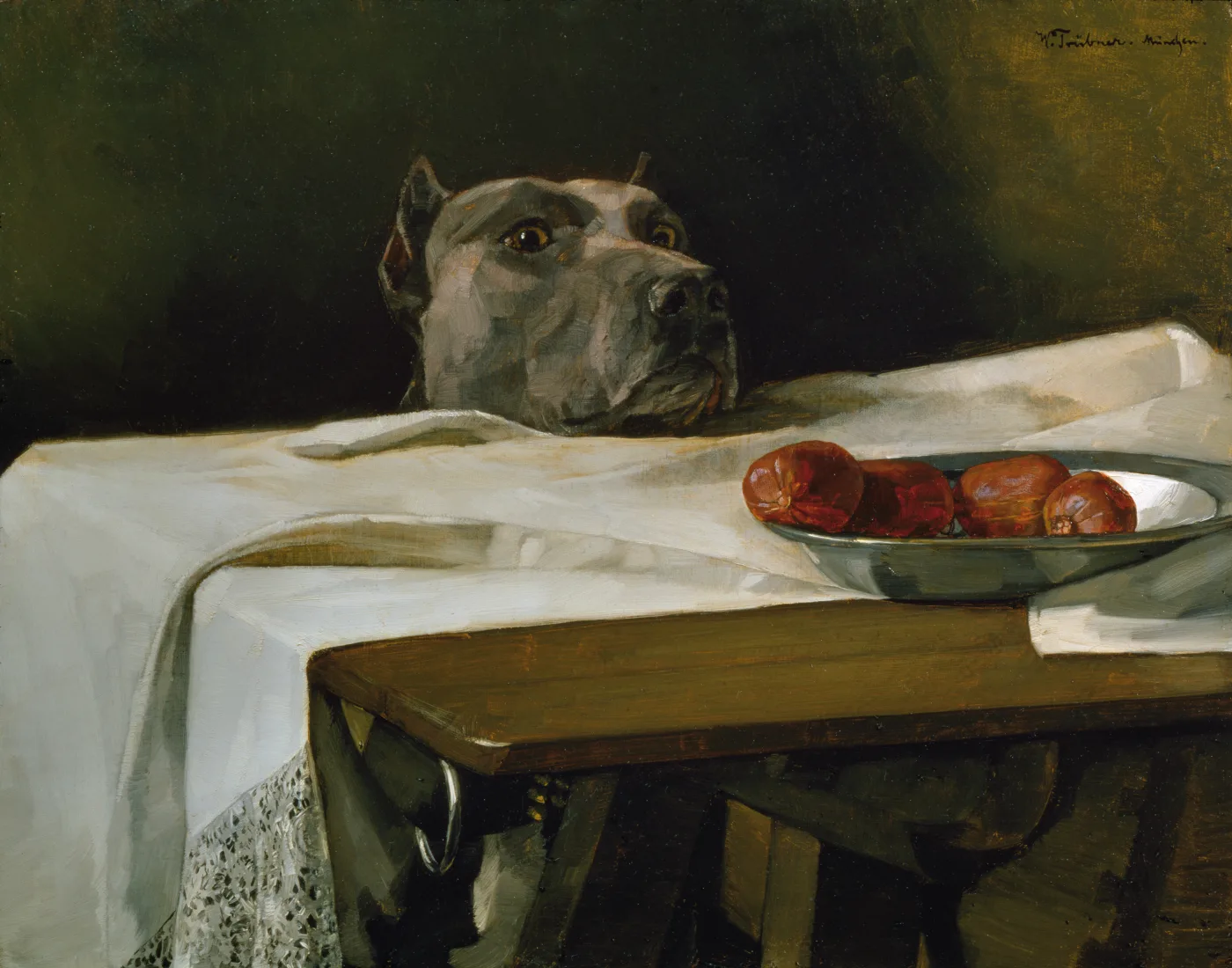
Painters take the dog as a question of form rather than allegory. The breed portraitists Wardle and Earl raise show-dog likeness to studio standard; the post-Impressionists fold the pet into domestic interiors and modern color.
- Wilhelm Trübner Caesar at the Rubicon c. 1878
- John Emms Hounds in a Kennel c. 1890
- Henri de Toulouse-Lautrec The Englishman at the Moulin Rouge 1892
- Arthur Wardle The Totteridge XI 1897
- Carl Reichert Curious Dachshund Puppies and a Frog c. 1900
- Pierre Bonnard The Terrasse Family (L'Après-midi bourgeois) 1900
- Cecil Aldin Plate from A Dog Day 1902
- Maud Earl Plate from The Power of the Dog 1910
"What changes across the centuries is not the dog — pigment shows that the spaniel has not really shifted in five hundred years — but what the painter wants the dog for."
— From the curator's introduction